


Electricity quietly powers almost everything in everyday life. Lights turn on in seconds, kitchen appliances keep the food coming, and chargers are plugged in all day. But such walls may hide an outdated electrical system that can steadily wear down with the passage of time. There are typically little warning indicators that precede a big electrical breakdown by a considerable time. Unfortunately, many homeowners disregard such indications since they seem innocuous at first.
Older wiring may add additional stress on your house, your appliances, and most importantly, the safety of your family. So early detection of the issue may save you from costly repairs, damaged equipment, and even electrical fires later on.
A home’s wiring system works hard every single day. Older wiring may not be able to keep up with today’s sophisticated houses that are adding smart gadgets, gaming systems, big TVs, air fryers, air conditioners, and home office equipment. Homes constructed decades ago typically require updating far sooner than people anticipate.
Here are the most common warning signals that your house may require rewiring soon, and why responding sooner rather than later may make a world of difference.
Flickering or Dimming Lights
Lights often flicker intermittently during storms, and that’s normally acceptable. However, if lights fade or flicker often while you use an appliance, it indicates overloaded or faulty wiring.
For example, your kitchen lights may become low every time you start the microwave. Similarly, the air conditioner might make the living room lights flicker. That typically indicates that the electrical system is struggling to distribute the power appropriately.
This stress may, over time, destroy wire connections inside the walls. The danger of overheating is thus greatly increased. Common symptoms include:
- Lights flickering randomly
- The lights dim when appliances start
- One room is becoming darker than the others
- Bulbs are burning out faster than normal
Ignoring these signs can slowly turn a minor issue into a much larger electrical concern.
Frequently Tripped Circuit Breakers
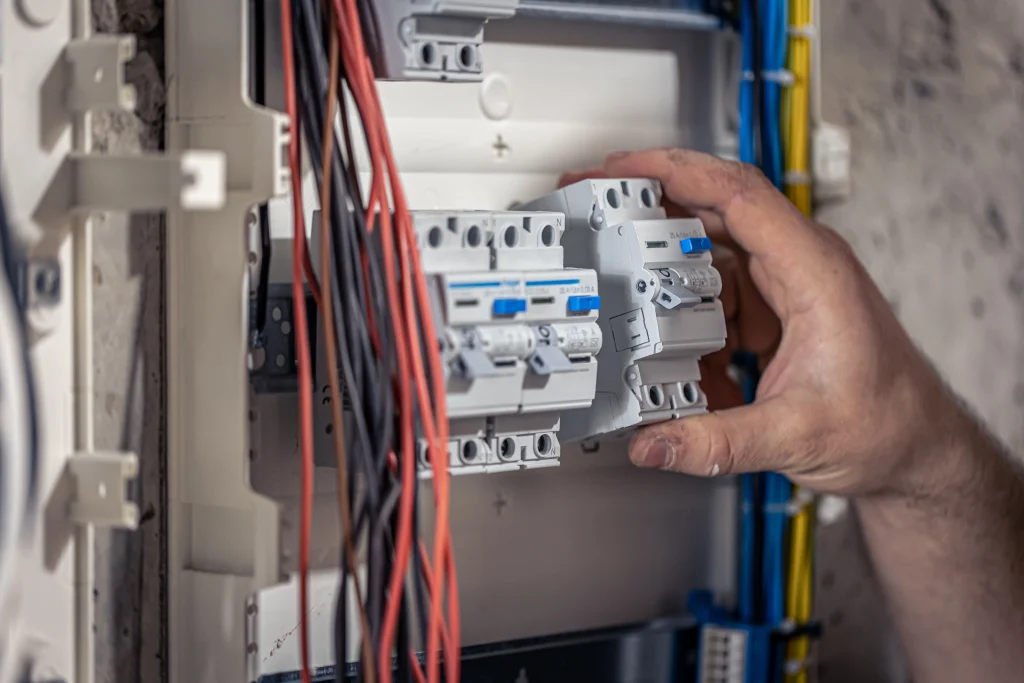
Circuit breakers are there to safeguard your house. They stumble over their words while attempting to tell you something vital.
We consume significantly more power in our houses now than we did 30 or 40 years ago. Older wiring systems were never designed for today’s energy needs. Consequently, overloaded circuits become extremely common.
A breaker that trips once in a while may not be alarming. However, repeated tripping usually means:
- The wiring is overloaded
- Circuits are wearing out
- Electrical panels are outdated
- Wiring connections are becoming unsafe
For many homeowners, it’s just a matter of resetting the breaker and getting on with life. The problem is that frequent overloads may progressively harm the wiring buried behind your walls. Frequent breaker tripping can cause irritation while doing ordinary tasks. It’s hard enough to lose electricity when preparing supper, working from home, or just winding down for the evening.
Burning Smells Near Outlets or Switches
Never disregard a burning odor. Electric wires produce heat naturally. But broken or loose wiring generates extra heat that may melt the insulation and surrounding objects. Often, the first warning indicator is that acrid burning smell.
Sometimes the smell appears briefly and disappears. Other times, it becomes stronger when plugging something in or turning on lights. Warning signs often include:
- Burning or smoky odors
- Warm wall outlets
- Discolored switches
- Black marks around outlets
- Melted plastic smells
These symptoms might be a sign of the wiring behind the wall starting to go bad. The quicker you reply, the better chance you have to prevent a dangerous situation from escalating.
Buzzing Sounds Coming From Walls or Outlets
Electricity should be rather quiet. So any buzz, crackle, or hum you hear is never a good sign. Bad wire connections may create small electrical sparks.
Over time, those arcs produce heat and damage surrounding materials. You may hear:
- Buzzing behind walls
- Crackling near outlets
- Humming from switches
- Popping sounds during appliance use
These noises may appear small, but they are typically indicators of significant electrical problems happening behind the scenes.
And poor electrical connections tend to become worse, not better, as time passes.
Warm or Sparking Outlets
Outlets should never feel hot. A slightly warm charger may seem harmless. But outlets themselves should be somewhat cool in typical usage. Heat is often an indicator of high electrical resistance in the wire.
Similarly, seeing sparks while plugging anything in should never become regular.
Danger signs include:
- Hot outlet covers
- Sparks during plug insertion
- Loose wall outlets
- Scorch marks
- Small electric shocks when touching switches
These problems may be signs of bad wire connections or overloaded circuits.
So putting off maintenance might increase the danger of harm to the equipment and electrical fires.
Two-Prong Outlets Throughout the Home
Many older houses still have two-prong plugs. They may still work, but they don’t have the grounding protection that contemporary electrical systems have. Grounding channels securely stray energy away from humans and gadgets. Without appropriate grounding, the risk of electric shock and damage to appliances is greatly increased.
If most of the outlets in your home have two prongs, it may be that you have an old wiring system that may require maintenance soon. Adapters are often utilized as a stopgap solution; they don’t cure the fundamental safety problem.
Strange Burning or Fishy Smells From Electronics
Electrical wiring faults may occasionally produce strange smells like burnt plastic or even fish. This odor is often caused by overheated wire insulation that is buried behind walls or within outlets. Electrical fires may start without warning; these odors should be investigated immediately.
Most homeowners detect the smell first near:
- Entertainment centers
- Power strips
- Kitchen outlets
- Laundry rooms
- Extension cords
Even if the smell disappears later, the issue may still exist behind the walls.
Outdated Wiring Materials
Some older homes still contain outdated wiring systems that no longer meet modern safety standards.
Older wiring materials may deteriorate naturally with age. Furthermore, years of heat exposure can weaken insulation and internal connections. Common outdated wiring types include:
- Knob-and-tube wiring
- Aluminum wiring
- Cloth-insulated wiring
These older systems frequently fall short of contemporary electrical needs. This means they may need to be inspected and upgraded considerably sooner than modern systems.
Homeowners who purchase an older property should be aware of the age and quality of the electrical system before they move in.
Extension Cords Everywhere
Never make extensions a permanent part of the home wiring. Are you often using power strips and extension cables at home? Your electrical system may not have enough outlets or balanced circuits.
This often suggests the original electrical system was built for a different age. Today’s home power:
- Multiple TVs
- Gaming systems
- Smartphones
- Laptops
- Smart appliances
- Home office equipment
Older electrical systems simply were not built for this level of demand. Therefore, constantly stretching cords across rooms often signals the need for electrical upgrades or rewiring.
Mild Electrical Shocks
A tiny shock when touching a switch or appliance may seem minor at first. However, even mild shocks often point to grounding or wiring issues. Electricity should never travel through your body during normal household use.
These shocks may happen because of:
- Loose wiring
- Faulty grounding
- Damaged outlets
- Deteriorating electrical connections
Although the shock may feel small now, the underlying issue can worsen over time.
Your Home Is Over 30 Years Old
Wiring systems typically deteriorate over time, and older houses can have hidden electrical dangers. Internal wiring might progressively go bad behind the wall if everything seems to be working fine.
Meanwhile, modern homes place far greater electrical demands on wiring systems than older homes ever anticipated. Aging systems may struggle with:
- Larger appliances
- Increased charging devices
- Modern HVAC systems
- Smart home technology
- Entertainment equipment
Consequently, homes older than 30 years may benefit greatly from a professional electrical inspection.
The Real Cost of Ignoring Electrical Warning Signs
Many homeowners postpone rewiring because the visible signs seem small. Unfortunately, electrical problems rarely stay small for long. Ignoring warning signs can eventually lead to:
- Expensive appliance damage
- Higher energy bills
- Frequent power interruptions
- Fire hazards
- Reduced home value
- Insurance complications
Meanwhile, addressing problems early often saves money and stress later. More importantly, safe wiring helps protect the people who matter most inside your home.
Small Signs Often Point to Bigger Problems
Electrical systems rarely fail without warning. In most cases, homes give clear signals long before serious issues appear. Flickering lights, buzzing outlets, heated switches, repetitive breaker tripping; these are all your home’s ways of calling for attention. Early maintenance may help you prevent expensive repairs down the road and make your house safer and more dependable every day.
If you start to see numerous these warning signals at your house, it may be time to have a chat with a reliable local electrical contractor. Companies such as CW Electric Construction Service may assist with inspecting aged systems, finding hidden problems, and suggesting safer long-term electrical modifications that suit your home’s requirements.